Living on the Costa de Almería? Dr. Jaime Jorge Cerrudo consults in English and sees patients from Roquetas de Mar, Aguadulce, Mojácar, Vera Playa, and across the province. Private appointment available within days — no GP referral required.
What is a pilonidal sinus?
A pilonidal sinus is a small cavity or tunnel in the skin, usually located in the natal cleft at the top of the buttocks. It often contains hair, debris and skin cells, and can become infected, forming an abscess or a chronically discharging sinus tract.
It predominantly affects young adults, particularly those with thick body hair, a sedentary occupation, or who spend long periods sitting. It is more common in men than women.
Key point: traditional open surgery for pilonidal sinus involves a large wound that can take weeks or even months to heal, often requiring time off work. The GIPS technique is a minimally invasive alternative with recovery measured in days, not weeks.
Common symptoms
- Pain and swelling in the upper buttock crease, worsening when sitting
- Redness and tenderness over the sacrococcygeal area
- Discharge of pus or blood from one or more small openings in the skin
- Foul-smelling discharge from the sinus tract
- Fever when the sinus becomes acutely infected
- Recurrent episodes of infection and discharge in chronic cases
GIPS technique vs open surgery
Dr. Jaime Jorge Cerrudo performs the GIPS technique (Minimally Invasive Pilonidal Sinus Treatment) as the preferred approach for chronic pilonidal sinus. Here is how it compares to conventional open surgery:
- Large excision wound
- Healing time: 4–12 weeks
- Significant time off work
- General or spinal anaesthesia
- Hospital admission required
- Higher recurrence rates
- Small incisions, minimal scarring
- Recovery: 2–7 days
- Return to work within days
- Local anaesthesia only
- No hospital admission
- Lower recurrence rates
How is the GIPS technique performed?
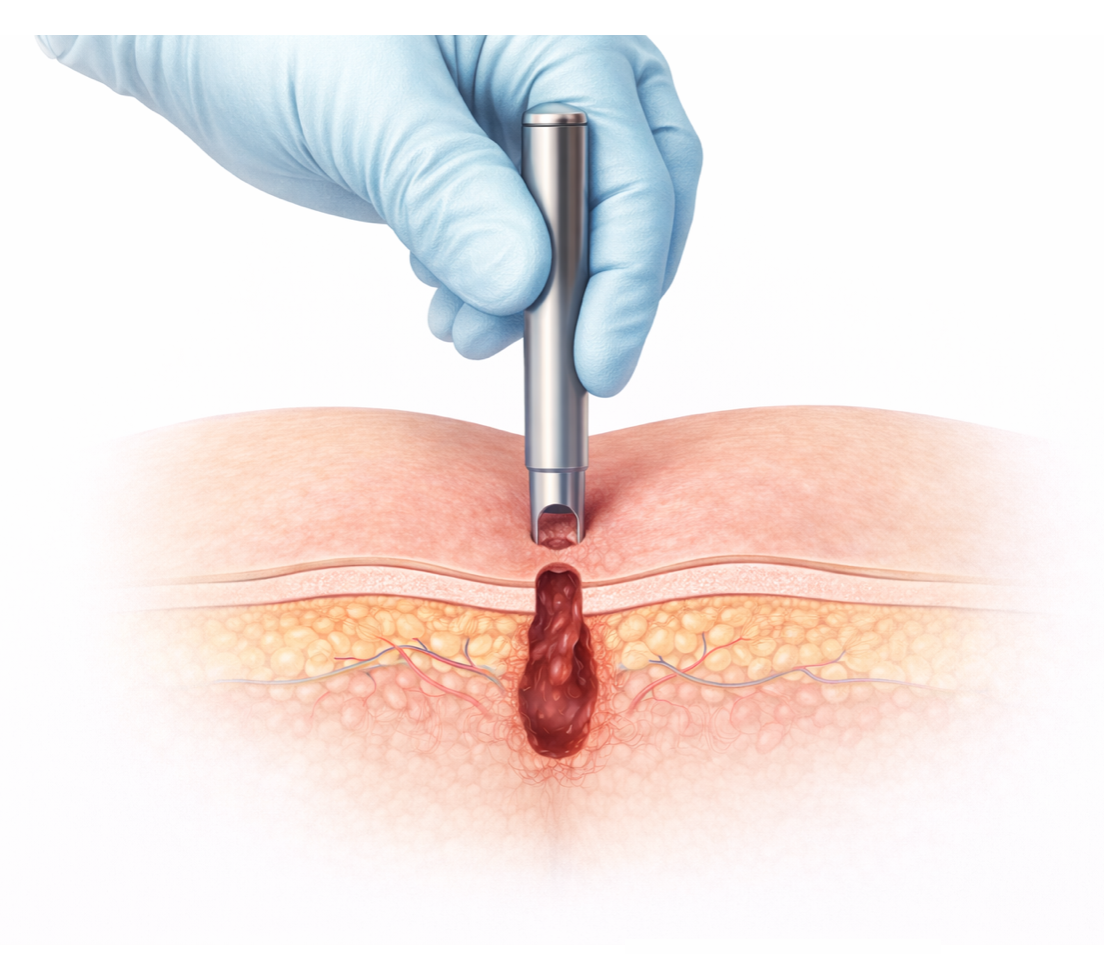
The procedure is performed in the clinic under local anaesthesia. No hospital admission is required and the patient is discharged the same day.
Assessment and planning — evaluation of the sinus tracts and pits using a probe and clinical examination
Local anaesthesia — the area is anaesthetised so the procedure is completely painless
Minimally invasive excision — all sinus tracts and pits are removed through small incisions using specialised instruments
Same-day discharge — the patient goes home after the procedure with simple wound care instructions
Results and recurrence
The GIPS technique achieves results comparable to open surgery in terms of cure rate, but with a significantly faster recovery and a much smaller wound. Most patients return to their normal activities within 2–7 days.
Preventive measures after treatment — such as regular hair removal in the area and avoiding prolonged sitting — help to reduce the risk of recurrence further.
Minimally invasive — maximum recovery speed
Dr. Jaime Jorge Cerrudo performs the GIPS technique under local anaesthesia in the clinic. No general anaesthesia, no hospital admission, and recovery measured in days — not weeks. Particularly suitable for patients visiting from abroad who cannot afford a prolonged recovery period.
Local anaesthesia only
No hospital admission
Recovery in 2–7 days
Low recurrence rate