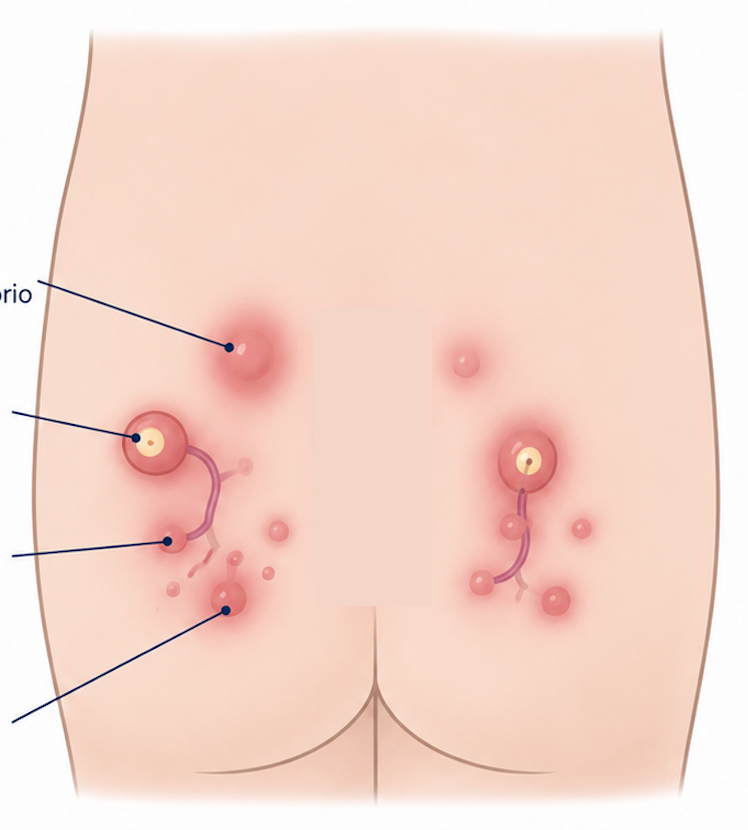
What is perianal hidradenitis suppurativa?
Hidradenitis suppurativa (HS) is a chronic inflammatory disease of the apocrine sweat glands of the skin, affecting mainly the skin fold areas: armpits, groin, perianal and perigenital regions. In its perianal location, it causes painful nodules, recurrent abscesses and fistulas that can severely impact the patient's quality of life.
It is more common in young adults, with a predominance in women, and has a significant genetic and hormonal component. Smoking and obesity are recognised aggravating factors.
Differential diagnosis: perianal hidradenitis can be confused with perianal Crohn's disease, anal fistulas, or perianal abscesses. Dr. Jaime Jorge Cerrudo performs a precise differential diagnosis to guide the most appropriate treatment in each case.
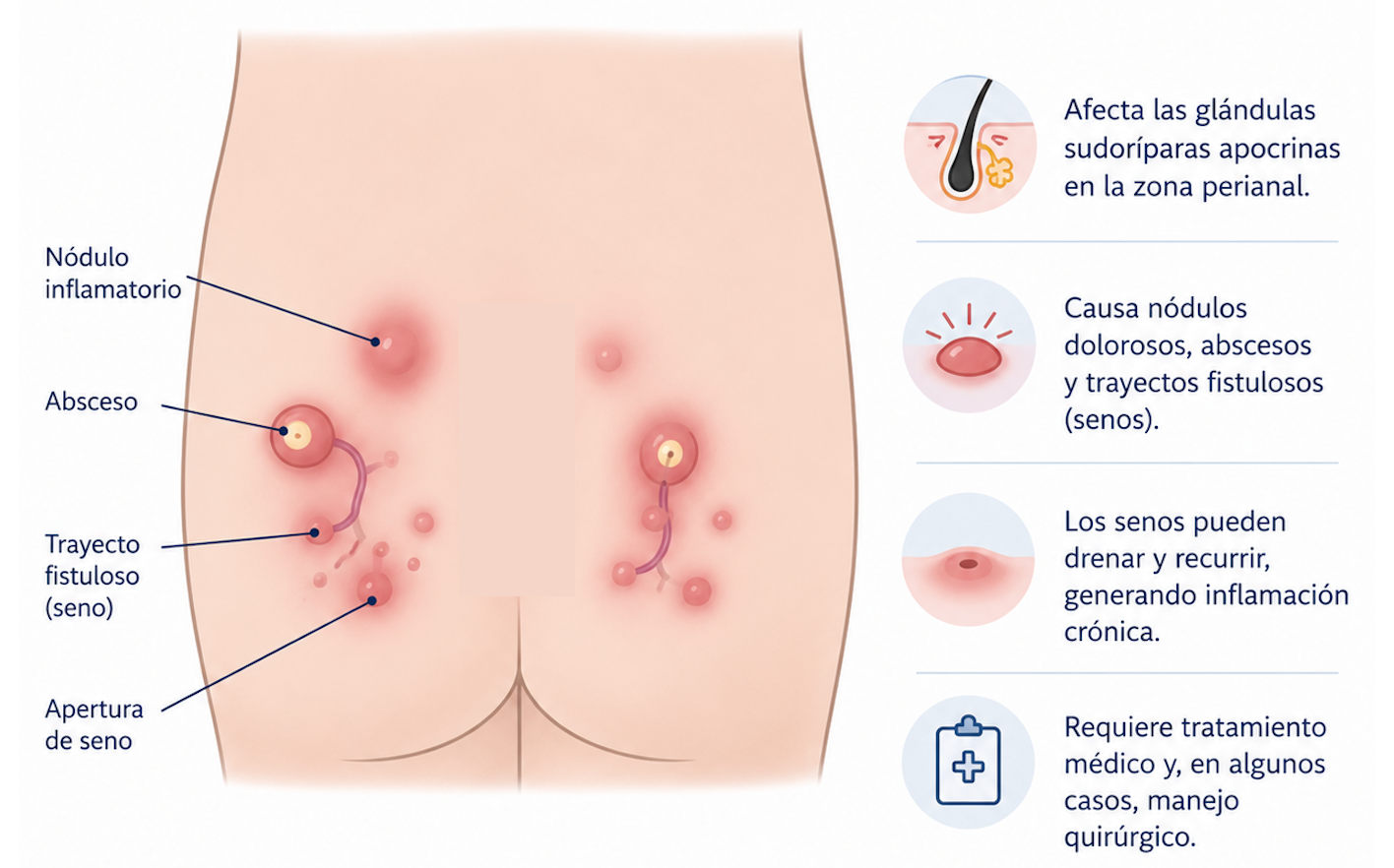
Perianal hidradenitis suppurativa — nodules, abscesses and fistulous tracts
Symptoms of perianal hidradenitis
- Recurrent painful nodules in the perianal area
- Abscesses that drain spontaneously or require incision
- Fistulas — tracts connecting nodules to each other or to the skin surface
- Scarring and fibrosis of the perianal skin in advanced stages
- Chronic discharge with odour and staining of underwear
- Pain when sitting, defecating, or walking
Hurley Classification
The Hurley classification is the most widely used system to determine the severity of hidradenitis suppurativa and guide treatment decisions:
Single or multiple abscesses without fistulas or significant scarring. No interconnecting tracts.
Recurrent abscesses with fistula formation and scarring. Lesions separated by areas of healthy skin.
Diffuse involvement with multiple interconnected fistulas and extensive scarring. The entire perianal area is affected.
Surgical treatment: individualised techniques
Dr. Jaime Jorge Cerrudo performs excision of perianal hidradenitis lesions under local anaesthesia at the clinic for less extensive cases. In more advanced cases, a wider procedure under regional or general anaesthesia may be necessary, combined with hospital-based biological treatments.
1. Pre-operative antibiotic treatment
Antibiotic treatment before surgery allows the active inflammation to be reduced, making it easier to identify the key elements before the procedure:
- Tunnels and fistulous tracts
- True fibrosis of the affected area
- Precise boundaries of the disease
This enables a more precise and less invasive operation, preserving as much healthy surrounding tissue as possible.
2. Surgical procedure
Assessment and classification according to the Hurley scale
Infiltrative local anaesthesia in the perianal area
Excision using the most appropriate technique for the case
Wound care and adapted post-operative follow-up
The choice of technique depends on the extent of disease, the Hurley grade, and the individual characteristics of each patient:
Deroofing
A conservative technique consisting of opening and removing the "roof" of the fistulous tunnel, leaving the wound bed exposed to heal by secondary intention. Ideal for lesions with individual, well-defined tracts.
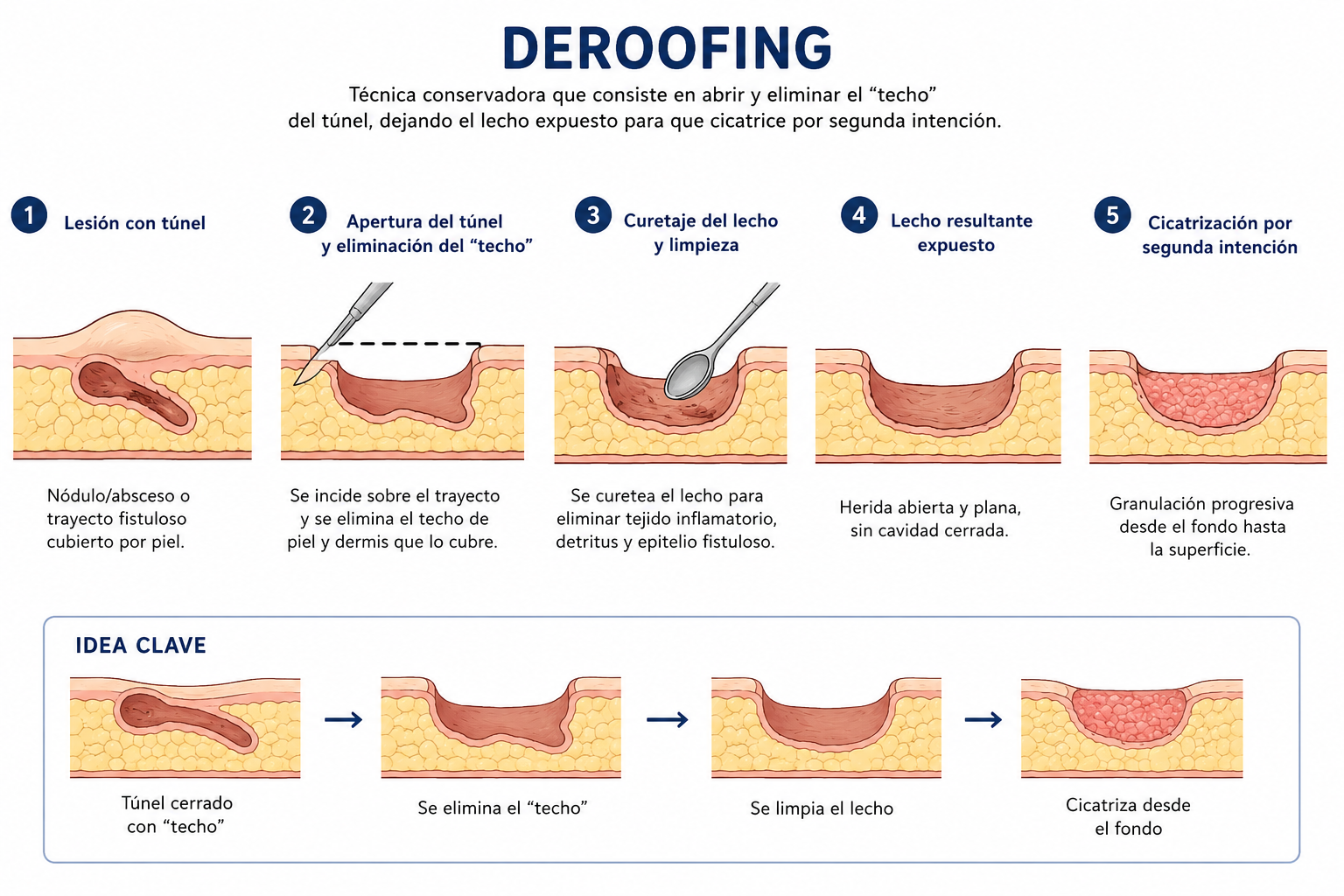
Deroofing technique for hidradenitis
STEEP Technique
Progressive tangential excision of all diseased tissue within the tunnel — roof, lateral walls, and floor — down to healthy tissue. It removes all the inflammatory tissue to promote healing.
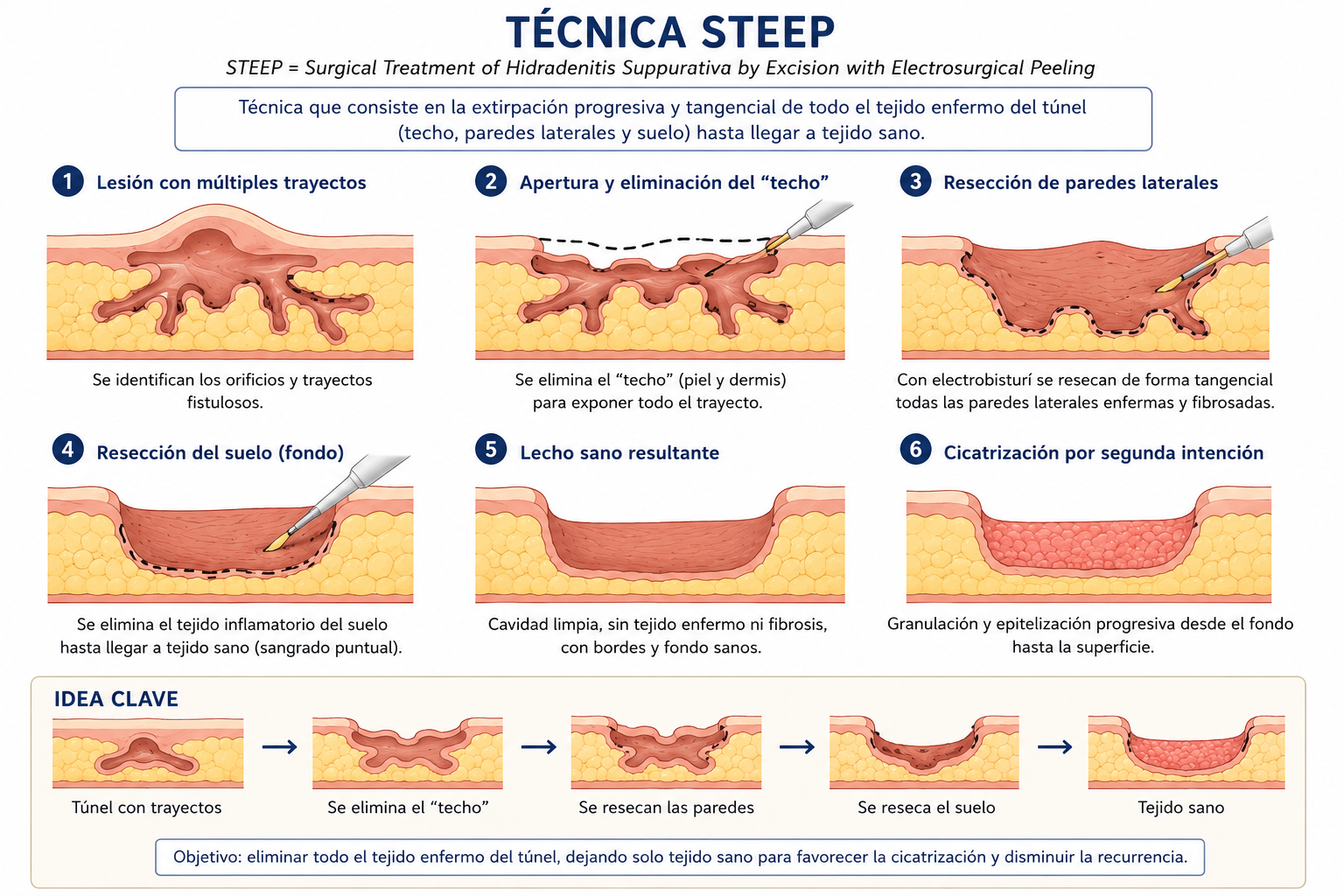
STEEP technique for hidradenitis
Targeted Surgery
This involves excising only the areas of active disease and the main tracts, preserving the surrounding healthy tissue. It allows primary closure where possible, or healing by secondary intention in larger defects.
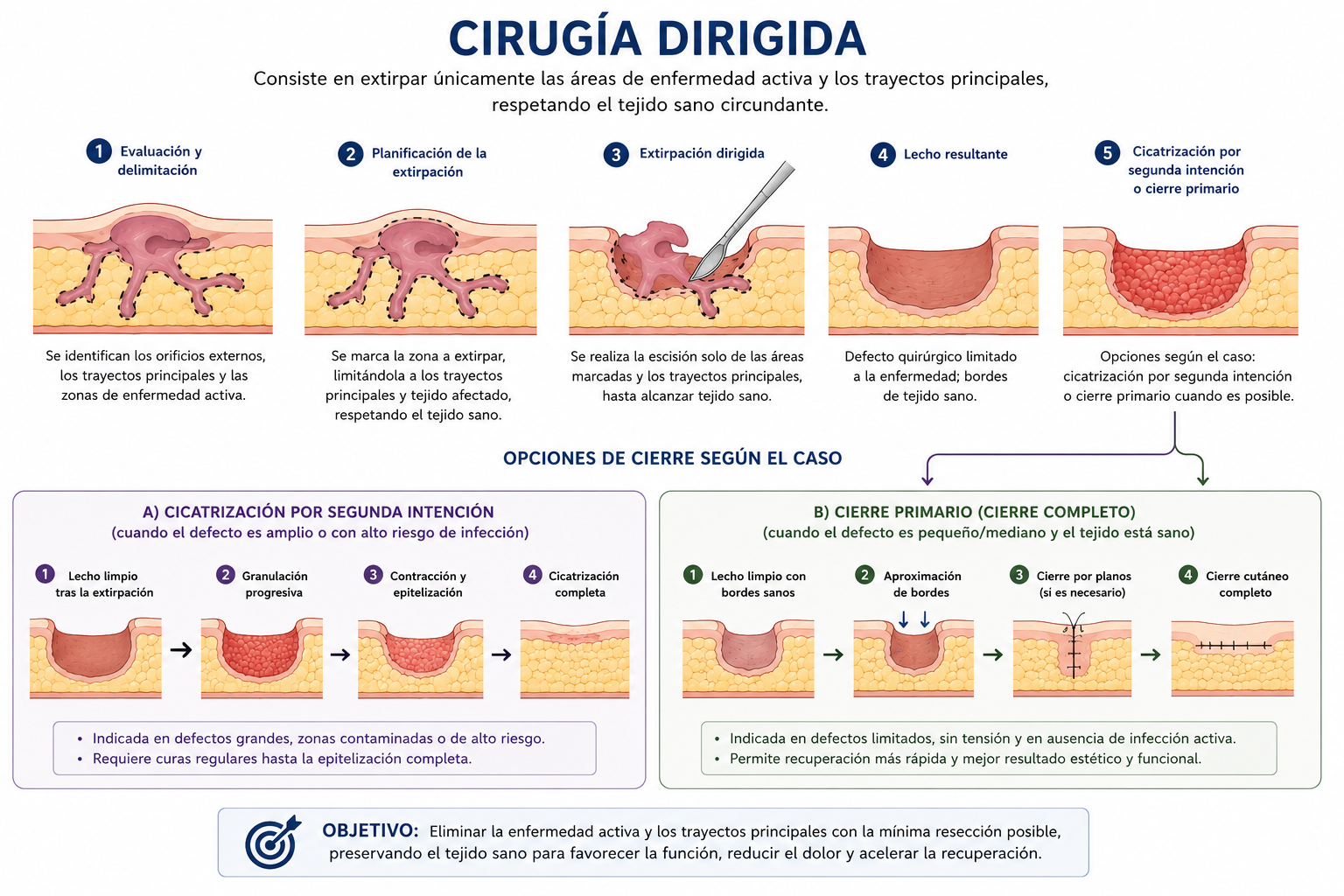
Targeted surgery for hidradenitis
3. Post-operative antibiotic treatment
Antibiotic treatment after surgery serves three key objectives:
- Stabilises the wound and promotes healing
- Reduces residual inflammation in the perilesional tissue
- Reduces early recurrence in the weeks following the procedure
Personalised diagnosis and treatment
Dr. Jaime Jorge Cerrudo assesses each case of perianal hidradenitis individually, determining the Hurley grade and the most appropriate treatment — from minor outpatient surgery to referral for systemic treatment in advanced cases.
Hurley classification at the consultation
Local excision under local anaesthesia
Precise differential diagnosis
Follow-up and relapse management