Internal haemorrhoids that habitually protrude (prolapse) can be treated effectively without conventional surgery. Rubber band ligation offers a definitive, minimally invasive and highly effective solution, particularly for grade II and III haemorrhoids where prolapse is the main symptom.
This outpatient technique is performed directly in the clinic, without hospital admission or general anaesthesia, allowing the patient to resume daily activities the same day. The whole procedure takes just 10 minutes and involves placing a small elastic band at the base of the haemorrhoidal cushion, cutting off its blood supply so the tissue retracts and falls away naturally within a few days.
What does rubber band ligation involve?
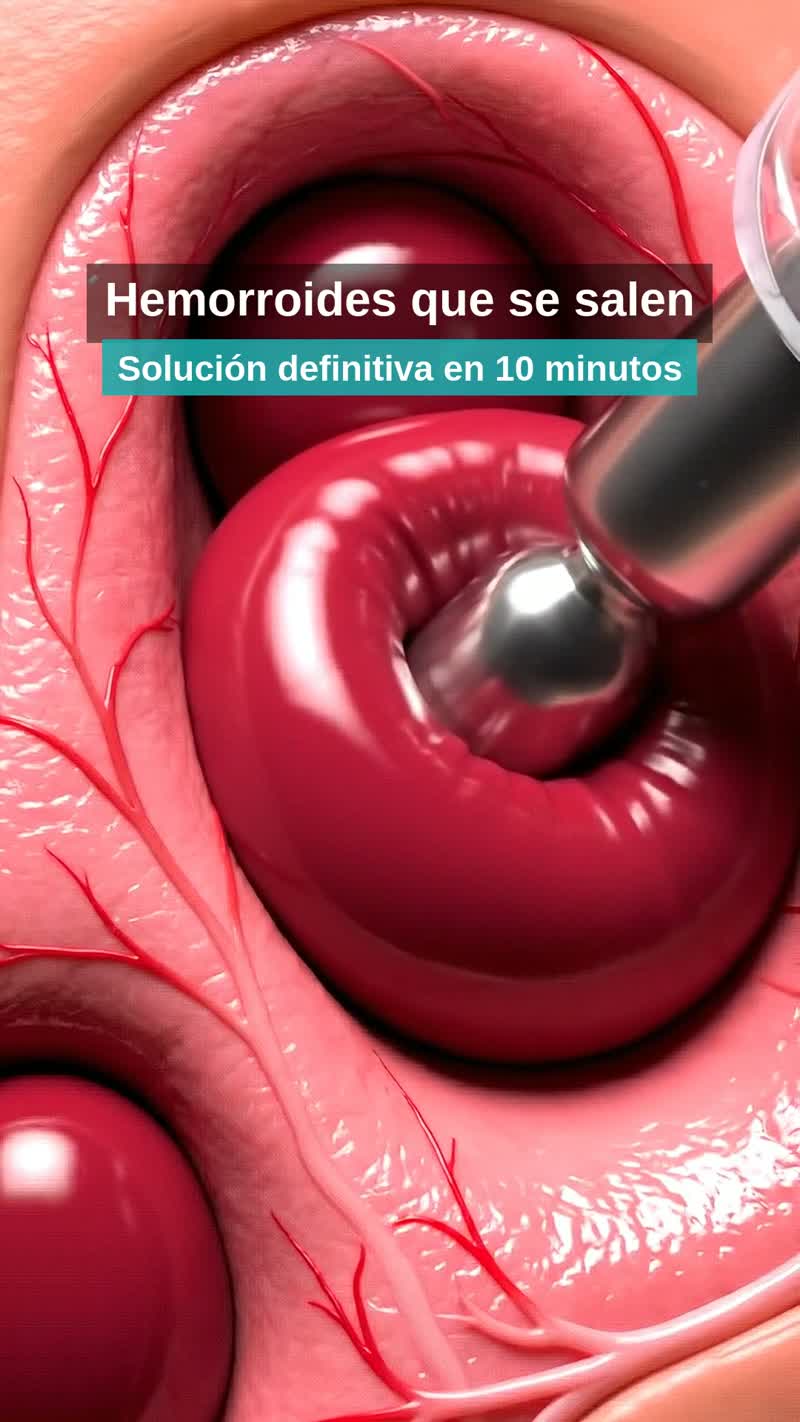
Rubber band ligation is an outpatient technique that involves placing a small sterile rubber band around the base of the internal haemorrhoidal cushion. This band compresses the blood vessels feeding the haemorrhoid, completely cutting off blood flow to the prolapsing tissue. Deprived of its blood supply, the haemorrhoidal tissue undergoes a controlled process of ischaemic necrosis and, within 5 to 10 days, detaches naturally along with the band during a normal bowel movement. The result is the permanent removal of the prolapsing tissue without the need for surgical excision. The treated area heals by forming a small area of fibrosis that fixes the remaining mucosa to the underlying muscle layer, preventing future prolapse. The procedure is carried out in an area of the anal canal with no pain-sensitive nerve endings, which means it can be performed without general anaesthesia and with minimal discomfort.
Which type of haemorrhoids is this technique suitable for?
Rubber band ligation is particularly indicated for grade II and III internal haemorrhoids — that is, those that do prolapse outside the anal canal during straining. In grade II, the haemorrhoids come out but return spontaneously; in grade III, they come out and require manual reduction by the patient. The ideal candidate is a patient who reports that their haemorrhoids habitually come out, with a sensation of a lump, discomfort, moisture or staining. In these cases, the technique offers success rates above 80% with minimal postoperative discomfort. However, each case must be assessed individually through a full proctological examination. For grade I haemorrhoids (without prolapse), other techniques such as sclerotherapy may be more appropriate, while for grade IV (permanent, irreducible prolapse) surgical treatment may need to be considered. Initial examination with an anoscope allows the proctologist to precisely determine the haemorrhoid grade and the most suitable technique for each patient.
Step-by-step procedure: how rubber band ligation is performed
The procedure follows a structured protocol of four key steps. First, a detailed anoscopic examination is carried out to directly visualise the internal haemorrhoids, assess their grade, size and exact position, and confirm that rubber band ligation is the most appropriate technique. Second, the band ligator is introduced through the anoscope until it reaches the base of the internal haemorrhoidal cushion, approximately 1–2 centimetres above the dentate line, an area with no pain receptors. Third, the haemorrhoidal tissue is gently suctioned into the ligator's cylinder and, once the right amount of tissue has been captured, the device is fired, releasing the elastic band firmly around the base of the haemorrhoidal cushion and cutting off its blood supply. The band is securely in place and the ligated tissue immediately takes on a bluish (cyanotic) appearance due to the lack of blood flow. Fourth and finally, once the instruments are withdrawn, clear post-procedure instructions are given and the patient is discharged immediately, able to walk home unaided. Within 5–10 days, the necrotic tissue detaches on its own during a bowel movement. The entire process is completed in 10 minutes.
Conclusion
Rubber band ligation offers a definitive solution for internal haemorrhoids that habitually prolapse. Being an outpatient procedure with no general anaesthesia and immediate recovery, it is a first-line treatment option for patients with grade II–III haemorrhoids where prolapse is the main symptom. At our clinic in Almería we apply the ONEstep philosophy: diagnosis and treatment in the same visit, with no admission and no general anaesthesia, so you can resolve your haemorrhoid problem quickly, safely and effectively. If your haemorrhoids habitually come out, don't normalise it or put off finding a solution any longer. A professional proctological assessment will give you access to the most suitable treatment for your case and help you regain your quality of life.