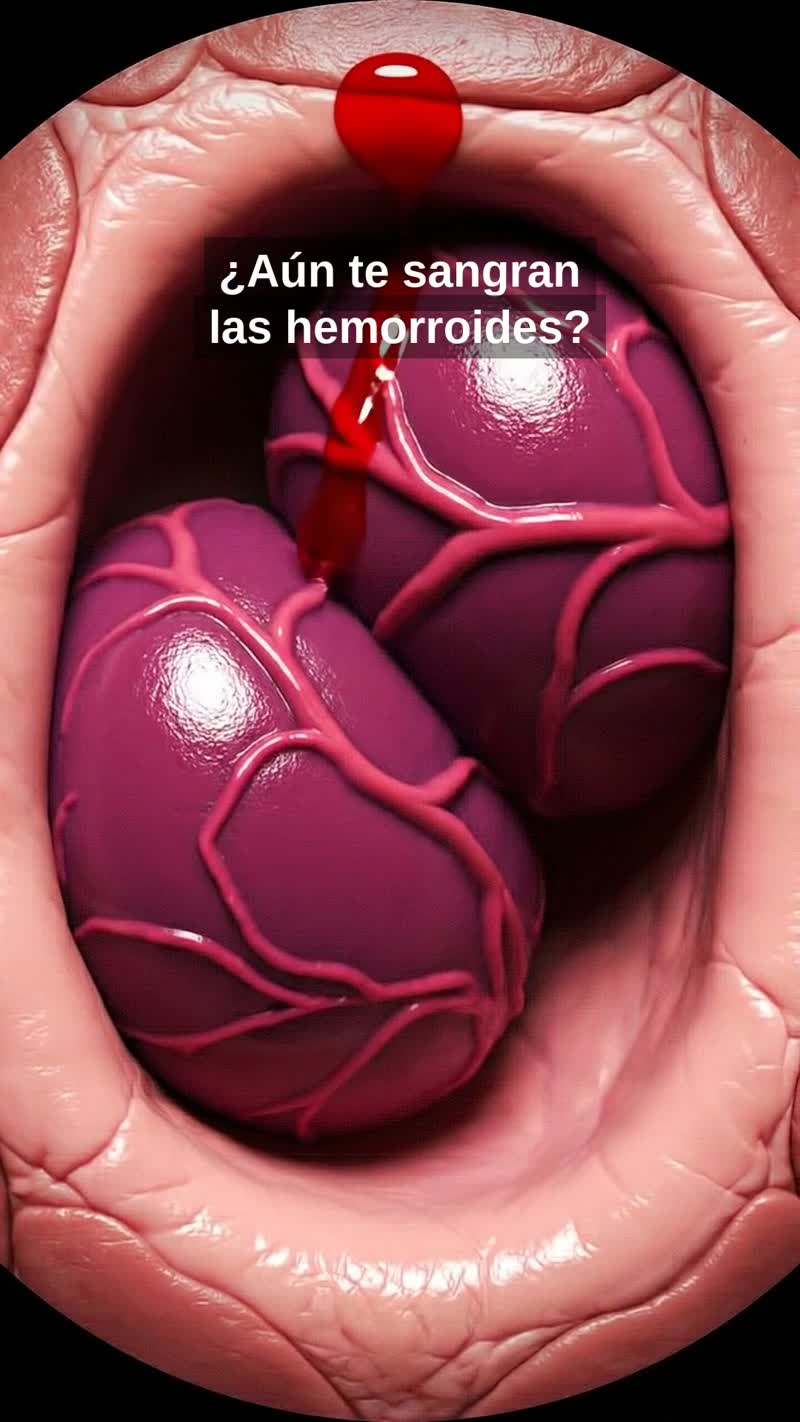
Bleeding internal haemorrhoids can be treated effectively without conventional surgery. Foam sclerotherapy offers a modern, minimally invasive and highly effective alternative, particularly for grade I and II haemorrhoids where bleeding is the main symptom.
This outpatient technique is performed directly in the clinic, without hospital admission or general anaesthesia, allowing the patient to resume daily activities the same day. The whole procedure takes just 10–15 minutes and involves injecting a sclerosing agent in microfoam form, causing the problematic haemorrhoidal tissue to shrink and close off.
What does foam sclerotherapy involve?
Foam sclerotherapy is an outpatient technique that involves injecting polidocanol — a sclerosing agent — in microfoam form directly into the internal haemorrhoidal tissue. This microfoam triggers a controlled inflammatory reaction in the dilated blood vessel, which sets off a progressive process of fibrosis and vascular closure (obliteration). The result is a significant reduction in bleeding and in the size of the haemorrhoidal cushion, without the need for surgical removal. Microfoam has the advantage of remaining in contact with the vessel wall for longer compared with traditional liquid sclerosant, which improves its effectiveness. The procedure is carried out under local topical anaesthesia, removing the risks associated with general anaesthesia and allowing the patient to walk out of the clinic immediately after treatment.
Which type of haemorrhoids is this technique suitable for?
Foam sclerotherapy is particularly indicated for grade I and II internal haemorrhoids — that is, those that do not prolapse outside the anal canal, or that do so but reduce spontaneously. The ideal candidate is a patient whose main symptom is bleeding, with or without mild discomfort. In these cases, the technique offers very high success rates with minimal postoperative discomfort. However, each case must be assessed individually through a full proctological examination. For grade III or IV haemorrhoids, or when there is a significant prolapsing component, other techniques such as rubber band ligation or more advanced surgical treatments may be necessary. Initial examination with an anoscope allows the proctologist to precisely determine the haemorrhoid grade and the most suitable technique for each patient.
Step-by-step procedure: how foam sclerotherapy is performed
The procedure follows a structured protocol of four key steps. First, a detailed anoscopic examination is carried out to directly visualise the internal haemorrhoids, assess their grade and exact location, and confirm that sclerotherapy is the most appropriate technique. Second, the microfoam is prepared by mixing the sclerosing agent (polidocanol) with air in controlled proportions, using the Tessari technique or similar, producing a fine, homogeneous foam with greater vascular contact capacity. Third, with the anoscope in place and under direct vision, the microfoam is injected submucosally at the base of the haemorrhoidal cushion, precisely where the vessels are most dilated. Because topical anaesthesia is applied beforehand, the patient feels barely any discomfort during the injection. Fourth and finally, once the instruments are withdrawn, post-procedure instructions are given and the patient is discharged immediately, able to walk home and resume normal activities with minimal restrictions. The entire process is completed in 10–15 minutes.
Conclusion
Foam sclerotherapy represents a significant advance in the treatment of symptomatic internal haemorrhoids. Being an outpatient procedure with no general anaesthesia and immediate recovery, it is a first-line treatment option for patients with grade I–II haemorrhoids where bleeding is the main symptom. At our clinic in Almería we apply the ONEstep philosophy: diagnosis and treatment in the same visit, with no admission and no general anaesthesia, so you can resolve your haemorrhoid problem quickly, safely and effectively. If you experience rectal bleeding, don't normalise it or ignore it. A professional proctological assessment will give you access to the most suitable treatment for your case. You can contact us by phone on +34 950 264 245 or via WhatsApp on +34 639 518 954.